Peptides 101: Understanding Cellular Signaling
Peptides are short chains of amino acids that act as biological keys — binding to specific receptors to signal your body to heal joints, rejuvenate skin, slow visible aging, and restore energy. Here's a clear, visual breakdown of what they are and how they work.
What Is a Peptide?
Think of your body as a giant communication network. Peptides are the text messages your cells send to each other — short, specific, and powerful.
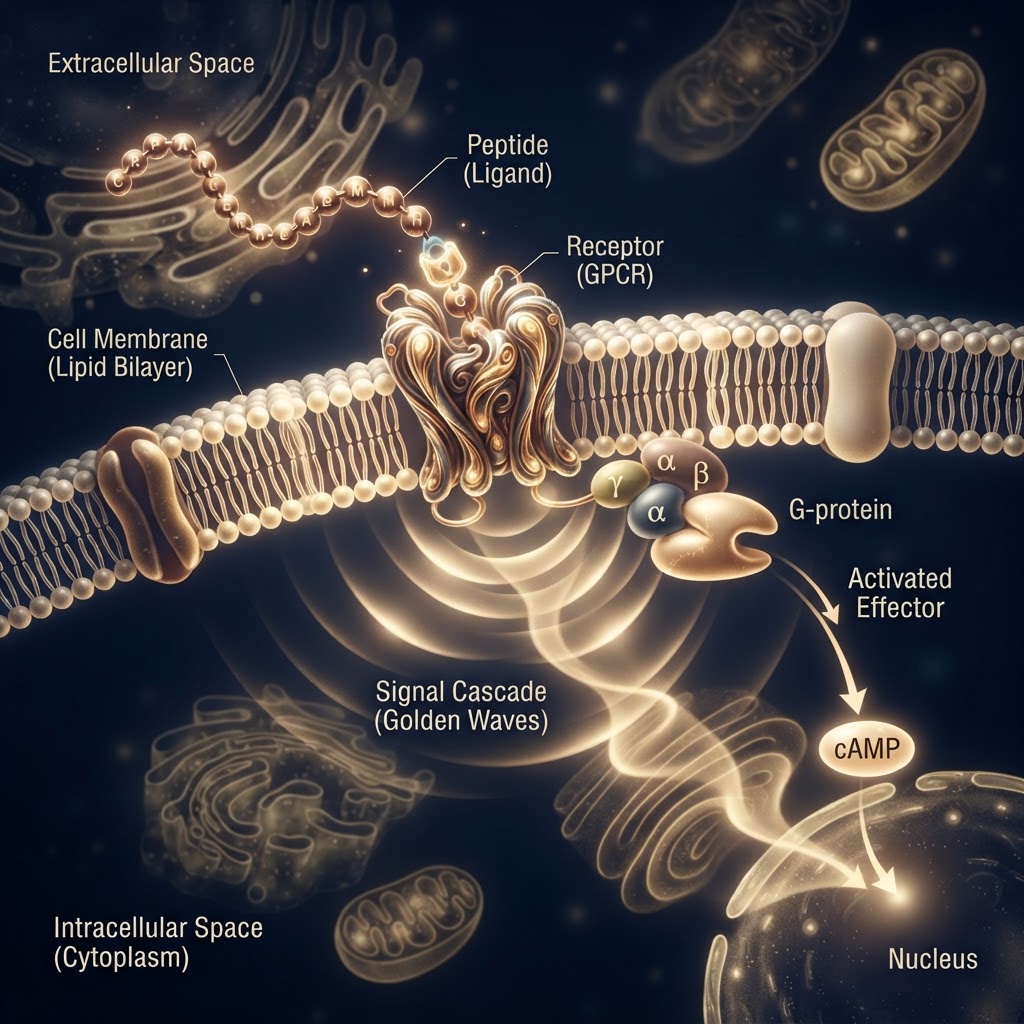
A peptide (amino-acid chain) binds its receptor like a key in a lock.
Tiny Chains, Big Instructions
A peptide is a short chain of 2 to 50 amino acids. Once a chain grows past 50, it folds into a full protein — so peptides are simply small, focused fragments of protein that carry a specific instruction.
Keys That Fit One Lock
Each peptide folds into a precise 3D shape that fits one specific receptor on a target cell — like a key cut for a single lock. That's why peptides are so targeted: "heal this tendon," "firm this skin," or "make more energy."
Already in Your Body
Your body makes thousands of natural peptides every day — insulin, oxytocin, and growth-hormone signals are all peptides. Therapy simply gives your body more of the specific messengers it needs.
How Peptides Work — In 4 Simple Steps
From the moment a peptide enters your system to the moment you feel the result, here's what happens at the cellular level.
1. The Peptide
A short chain of 2–50 amino acids folds into a precise 3D shape — a biological 'key' made to fit one specific lock.
2. Receptor Binding
It travels to a target cell and binds its matching receptor — like a key sliding into a lock.
3. Signal Sent
Binding flips a switch inside the cell, telling it exactly what to do — heal, burn fat, or build tissue.
4. The Result
The cell carries out the instruction: faster healing, more energy, firmer skin, or improved metabolism.
From Aching Joints to Visible Aging
Because each peptide carries a precise instruction, therapy can target the exact systems that decline with age — joints, skin, energy, recovery, and more.
Joint & Tissue Repair
Peptides like BPC-157 and TB-500 signal tendons, ligaments, and cartilage to heal faster — easing joint pain, tendonitis, and stubborn injuries.
Skin & Visible Aging
GHK-Cu and our Glow Blend stimulate collagen and elastin, firming skin, smoothing lines, and restoring a radiant, youthful glow from within.
Recovery & Resilience
Accelerate post-workout recovery, reduce inflammation, and rebuild muscle and connective tissue so you stay strong and mobile as you age.
Cellular Energy
NAD+ and mitochondrial peptides restore ATP production at the cellular level, fighting fatigue and rebuilding deep, lasting energy.
Focus & Sleep
Nootropic peptides cross the blood-brain barrier to clear brain fog, boost BDNF, and deepen restorative slow-wave sleep.
Longevity & Vitality
Senolytic and telomere-supporting peptides help clear aging 'zombie' cells and protect cellular health for a longer, more vibrant life.
When Will I See Results?
Energy and recovery benefits often appear within 1–2 weeks. Skin firming, joint repair, and deeper anti-aging changes build steadily over 6–12 weeks as your cells respond to the new signals.
Peptides vs. Steroids: What's the Difference?
The short answer: peptides signal your body to act naturally; steroids replace your body's hormones directly. Here's the side-by-side.
Peptides work with your body — nudging your own systems to heal, recover, and optimize naturally. They preserve your natural hormone feedback loops and carry a generally low side-effect profile when properly dosed and monitored. That's why Signal Wellness focuses on peptide-based optimization, with every protocol prescribed by an independent licensed provider and tailored to your labs and goals.
Ready to Explore Your Protocol?
Take the 2-minute quiz to see which peptides align with your goals, or book a free 1-on-1 consultation with Signal Wellness.